The Biggest Shift in CBSE in Years
Let's look at the 5 key changes
When we speak to parents, we hear this often:
“I don’t want my child in a CBSE school.”
And when we ask why, the answer is usually similar.
There’s a fear that CBSE means traditional, rote-based learning.
A system where marks matter more than understanding.
Where everything revolves around exams.
And honestly, that perception didn’t come from nowhere.
For years, that has been the experience in many CBSE schools.
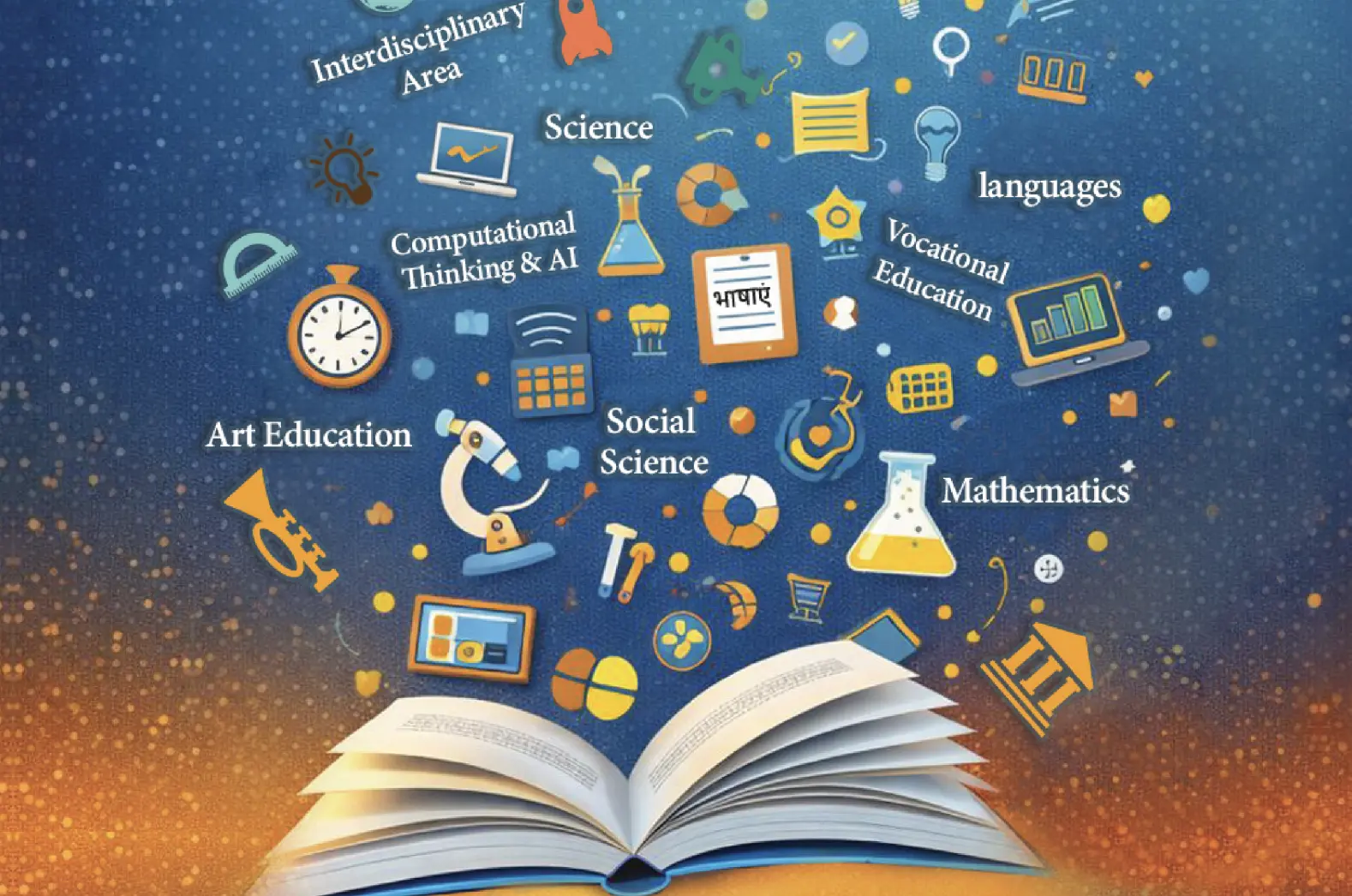
But recently, CBSE has made multiple announcements of changes around curriculum, assessments, and learning approaches. We feel CBSE is undergoing its biggest transformation in decades. CBSE is shifting away from "marks at any cost" and toward skills, learning, and digital readiness.
In this article, we deep dive on why the changes and what are the changes announced till date:
Why the changes?
A lot of this comes from the National Education Policy (NEP) 2020.
At its core, NEP is trying to rethink what school education should look like.
Instead of overloading children with content, it pushes for the curriculum to be reduced to “core essentials” - creating space for thinking, questioning, and deeper understanding.
It also breaks long-standing silos. No more rigid separation between:
- Arts and Science
- Academic and Vocational
- Curricular and Extra-curricular
Students are expected to have more flexibility in what they learn and how they learn it.
There is also a strong push towards vocational exposure, starting as early as middle school. The idea is simple: not every child needs to follow the same academic path, and skills should be valued just as much as marks.
So, what is changing?
There are 5 major changes (you can find the circular here):
1. Learning is becoming more skill-focused: CBSE is introducing Computational Thinking and AI early in school (from grades 3 onwards). The goal is building logical thinking, problem-solving, and comfort with technology.
2. Exams will test thinking, not memory: The structure of assessments is changing in a meaningful way.
In Classes 9 and 10:
- Students will take a standard exam (core concepts)
- And can optionally take an advanced paper focused on higher-order thinking
The advanced paper is shorter but focuses more on analytical testing reasoning. More importantly, across subjects, nearly 50% of questions are now competency-based - case studies, data interpretation, real-life scenarios.
This is a big shift from “write what you memorised” to “show how you think.”
3. One exam no longer decides everything
CBSE is also reducing the pressure of a single high-stakes exam. Grade 10 students, starting this year, now get two opportunities:
- Main exam (Feb)
- Improvement attempt (May)
The better score across 3 subjects is considered
4. More structured focus on vocational education
Art, Physical Education, and Vocational Education are now being treated as core parts of learning and not just add-ons. They come with defined learning outcomes and structured assessment.
5. Language learning is getting more structured
CBSE is strengthening the three-language approach, with a stronger push towards Indian languages and multilingual learning.
(We’ve covered this in detail in our earlier article here)
Haloparent’s take: what does this mean for parents?
CBSE doesn't want to be the same board it used to be.
It is becoming:
- More flexible
- More skill-focused
- More aligned with real-world learning
But here’s the thing - These changes are happening at the board level. How they show up will depend entirely on the school and the teaching faculty.
One school may still teach the old way. Another may fully embrace this shift.
And here’s where Haloparent can help, where parents share what schools are really like - beyond brochures and claims.
So you can make decisions with real context and not assumptions.