What is Progressive Pedagogy?
And how do you know the school actually follows it?
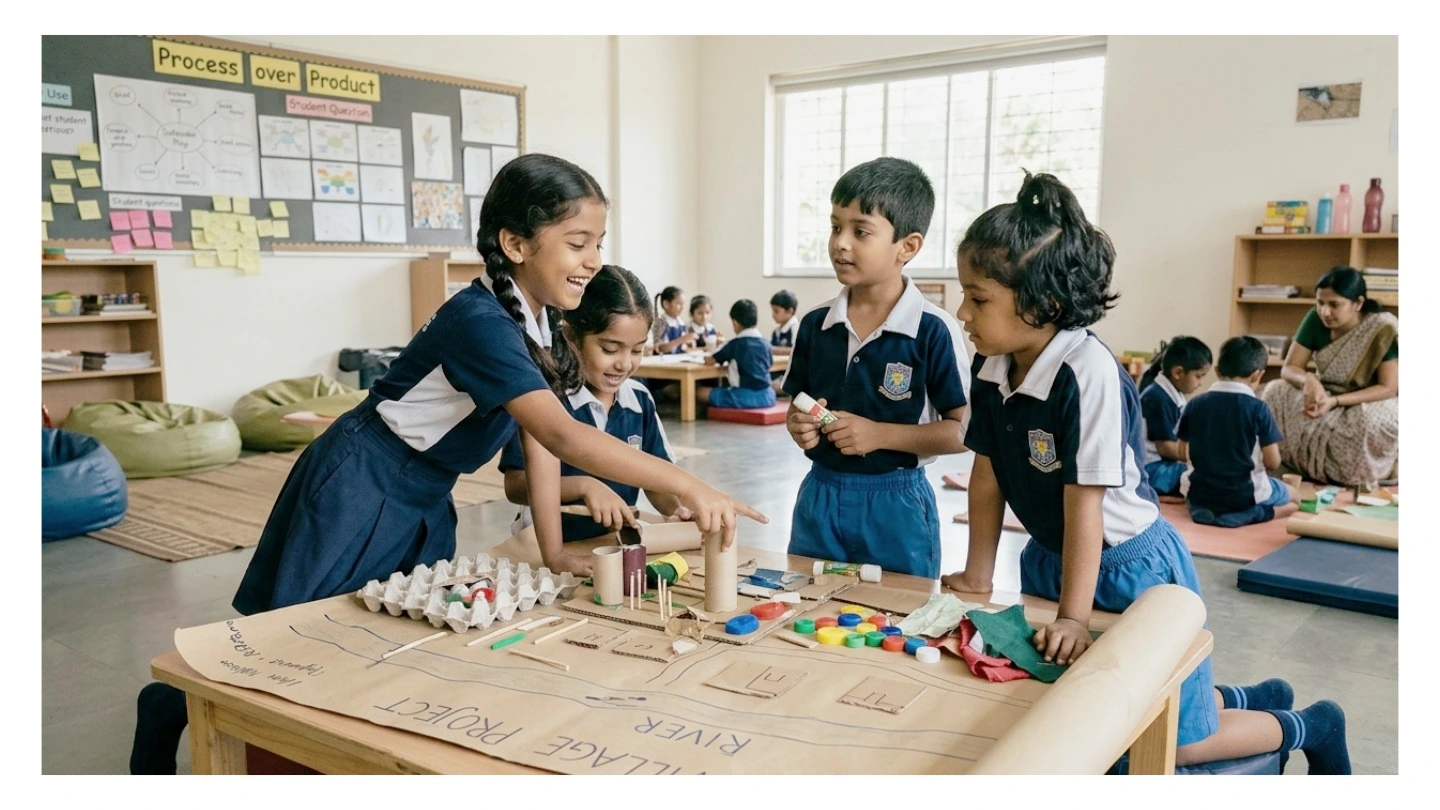
If you have toured schools, you’ve likely heard the term "Progressive Pedagogy" tossed around many times. But what does it really mean?
At Haloparent, we believe in looking past the marketing brochures. Let’s dive into what this philosophy actually means, where it comes from, and how to tell if a school is truly living it.
⭐ What is Progressive Pedagogy?
At its heart, progressive pedagogy (simply - progressive way of teaching) is a shift from the "factory model" of education (where students sit in rows and memorize facts - remember the vibe of Another Brick in The Wall? 😄 ) to a student-centered model.
Based on the philosophy that - “children learn best by doing”. It prioritizes critical thinking and emotional intelligence over standardized testing.
The 4 Pillars of Progressive Learning
- Experiential Learning: Knowledge is discovered through projects and experiments rather than lectures.
- Integrated Curriculum: Subjects bleed into one another. A student might study a local river by measuring its flow (math), testing its pH (science), and writing a sample letter to the mayor about pollution (civics).
- The Whole Child: Success is measured by how a child manages conflict and works in a team, not just their test scores.
- Collaborative Environment: The teacher is a "guide" rather than somebody who knows everything.
🔎 The "Progressive Check": How to Spot the Real Deal
Many schools use the label because it’s trendy. Here is how you can tell if a school actually walks the talk:
- Teacher - Student interaction: If the teacher dictates the discussion then it is traditional. Progressive pedagogy encourages students asking question rather than sitting silently.
- Look at the Walls: Do you see "perfect" identical posters? That’s traditional. True progressive schools display work-in-progress: messy brainstorming charts, student reflections, and "mistakes" that show the learning journey.
- Listen to the Noise: A pin-drop quiet room usually means passive learning. Look for a "productive hum" - students debating, asking questions, and collaborating.
- Observe the Furniture: Are desks bolted in rows facing the front? Progressive spaces use flexible seating - circular tables, floor cushions, and rugs - signaling that the students are the center of the room.
- Ask About Assessment: If the answer is "Friday spelling tests," it’s likely traditional. A progressive school will talk about portfolios, narrative reports, and self-evaluations.
💡Haloparent FAQs
- Can a CBSE or ICSE school be progressive?
Yes, but it’s a spectrum. The board defines what is taught, but the school defines how. While a CBSE school can use inquiry-based methods, they often become more traditional in Grades 10 and 12 to meet board exam requirements.
- Are all IB (International Baccalaureate) schools progressive?
By design, yes. The IB framework requires projects and curiosity-led learning. However, some schools adopt the IB curriculum but keep a "traditional" mindset. Always check the school's culture, talk to other parents and not just their certification.
- Is it "easier" or "less rigorous"?
Actually, it’s often harder. Memorizing a paragraph is simple; building a working model and defending your research in a presentation requires much higher levels of independent thought and organization.
- What is the difference between Progressive and Alternative schools?
While these terms are often used interchangeably, they represent different levels of "breaking away" from traditional schooling:
i) Progressive Schools focus on how children learn. They stay within the general mainstream system (and usually follow boards like IB, IGCSE, or CBSE) but replace lectures with hands-on projects, collaboration, and critical thinking. The goal is to prepare students for the modern world and universities using better, more engaging methods.
ii) Alternative Schools focus on why children learn. They often step entirely outside the mainstream system (sometimes without any board affiliation). They follow specific, deep-seated philosophies - like Waldorf, Krishnamurti, or Democratic schooling - where student freedom, spiritual growth, or community living might be prioritized over standard academic milestones.
Comparison at a Glance
Feature | Traditional Pedagogy | Progressive Pedagogy |
Teacher's Role | Authority / Knowledge Giver | Facilitator / Co-learner |
Student's Role | Passive Listener | Active Researcher |
Success Metric | Grades & Exam Scores | Portfolio & Skill Mastery |
Motivation | External (Rewards/Punishment) | Internal (Curiosity/Interest) |
What’s our takeaway?
Don’t fall for schools using the terms like progressive if you are looking for Progressive pedagogy based schools. Check if the school culture and environment matches with the factors we mentioned above. And talk to other parents - ask about their experience to understand how truly progressive it is.
If you found this article helpful, we’d love for you to share this with your community of friends, family, and colleagues. ❤️