What Does “International” or “Global” School Actually Mean?
What these names actually mean and what parents should really check
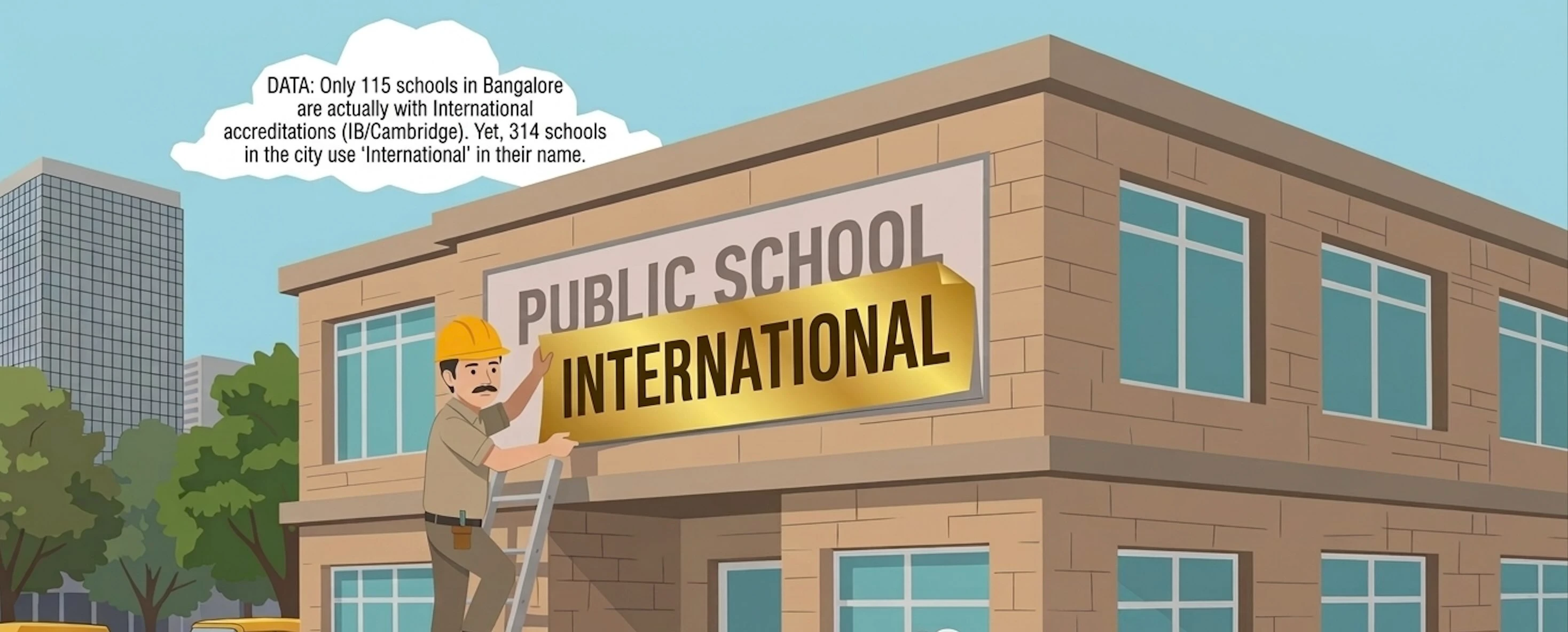
When parents begin researching schools, one thing quickly becomes noticeable. Your Facebook, Instagram feed, and WhatsApp groups suddenly seem filled with schools with words like “International”, “Global”, or “World” in their names. Over time, it is easy to feel that choosing a school with these terms may mean investing in a more global future for your child.
But here is the reality: in many cases, the only thing “international” about these schools may be the name itself.
Why Schools Use These Terms
When parents see the word “International,” they often associate it with smaller class sizes, modern infrastructure, and exposure to global opportunities. Schools are aware of this perception. Adding words like “Global” or “International” to a school’s name can make the institution appear more aspirational and future-focused. In some cases, this branding may also justify 30% - 50% higher fees compared to other schools offering similar facilities or curricula.
A school using these terms may actually fall into one of several categories:
✅ An accredited international school — offering curricula such as International Baccalaureate (IB) or Cambridge (IGCSE).
✅ A CBSE or ICSE school with global locations or international exchange initiatives.
❓ A school using the term primarily as branding, while continuing to follow a national or state board curriculum.
The Reality Gap: 314 vs. 115
To understand how widespread this trend is, we looked at the numbers in Bengaluru.
According to 2024–25 data, the city has around 3,482 private schools.
Out of these, 314 schools include words like “International” or “Global” in their names.
At first glance, it might appear that the city is a hub for international education.
However, when we cross-referenced these schools with accreditation data from the International Baccalaureate (IB) and Cambridge (IGCSE), the number looked very different.
Only about 115 schools in the city are actually affiliated with these international curricula.
In other words, 64% of schools using “International” or “Global” in their names still follow Indian boards such as CBSE, ICSE, or state boards.
The Regulatory Hammer
In fact, the use of terms like international and global in school names has recently attracted regulatory attention.
A recent report noted that authorities in Maharashtra are reviewing school names after observing that many institutions use such terms without actually offering international curricula, which can create confusion for parents choosing schools.
The discussion has raised questions about whether school names should more accurately reflect the curriculum they offer.
Haloparent’s Take
For parents, the takeaway is simple: don’t get biased by the school’s name.
Instead of focusing on branding, it helps to ask a few straightforward questions to the school:
• Which board or curriculum does the school follow?
• Is the school officially affiliated with that board?
• What languages and academic programs are offered?
• If the school claims international exposure, what does that actually include?
A school’s name rarely tells the full story. What matters much more are the fundamentals like curriculum, teachers, learning culture, and how students experience school day to day.
And when you are trying to understand how a school actually works beyond its brochure, hearing from other parents who have already navigated the same decisions can make the picture much clearer.
That’s exactly the kind of insight parents share with each other on Haloparent.
If you’re comparing a few schools right now, it can help to see what other parents are saying. Explore the conversations on Haloparent - and if you found this article useful, do share it with other parents who might benefit from it.